
WHITE WATER RAFTING WITH KIDS NEAR VAIL: AGES AND CLASSES
White water rafting with kids near Vail starts at age 2 on Class II water and at 7 or 8 on Class III, depending on the water level that week.
Age is not the whole answer, though. Weight matters too, because a life jacket only works if it fits, and current river conditions can move the minimums.
In this article, Anders Dahlberg, Director of Operations at Sage Outdoor Adventures, explains what actually determines whether your kids can join, what a family trip looks like with an eight-year-old in the boat, how guides handle a nervous kid at the put-in, and what to do from breakfast on to make the day go right.
What Age Can Kids Go White Water Rafting Near Vail?
The short version, straight from the boathouse:
| Minimum | Why | |
| Class II family float | Age 2 | Guide rows the whole trip; calm, swimmable stretch |
| Class III rapids | Age 7 or 8 | Depends on the current water level; higher water raises the minimum |
| Any trip | PFD must fit by weight | Kids under 50 pounds use a smaller life jacket that Sage only allows on Class II |
That last row is the part parents rarely hear from generic rafting pages. As Anders explains, the personal flotation devices Sage provides have weight limits: anyone under 50 pounds wears a smaller PFD that is restricted to the Class II stretch. Above that weight, there is an appropriately sized jacket for every rider. A properly fitted, Coast Guard-approved life jacket is the single most important piece of safety gear on the river, and fit is a function of weight, not age.
Water level also affects the age minimums. Higher water means bigger waves on the same stretch, so the Class III minimum sits at 8 during high flows and drops to 7 as the river comes down through the season.
What a Class II Family Trip Actually Looks Like
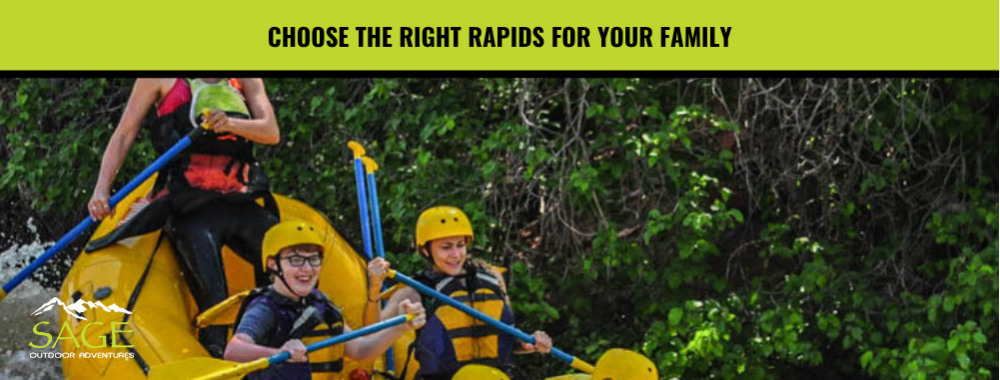
The Class II Upper Colorado trip is the one built for families, and it runs differently than most parents picture:
- Nobody in your family paddles. The guide is on the oars the entire trip, rowing and controlling the boat.
- Kids can sit wherever they want. They are free to move around the boat, look at things, and relax rather than focus on commands.
- There is real swimming time. Deeper calm sections are open for swims, and about halfway down the river the boats stop at Cannonball Island, a little beach with a tipi where everyone hangs out and swims.
- Parents get a break too. As Anders puts it, the guide gets to babysit for a couple of hours while you take a breath and enjoy the scenery.
On the rapid classification side, Class II sits near the bottom of the International Scale of River Difficulty: moving current, small waves, splashes. Exciting enough for kids, calm enough for toddlers.
Ready to look at dates? Our Vail whitewater trips page lists every family stretch with ages and times side by side, or call 970-540-5741 and tell us the ages in your crew.
How Guides Handle a Nervous Kid at the Put-In
It happens all the time, and it almost never ends with a family going home. Three things happen instead.
The guide resets expectations
The reservation team already matched your family to the right trip, so the guide’s first move is simple reassurance: this is not above the level you signed up for, it is genuinely fun, and first-timers ride this stretch every single day.
The nervous kid sits next to the guide
A child worried about falling out gets seated right beside the professional in the boat, the person whose whole job is preventing exactly that.
Or the kids get sandwiched
Guides can seat kids in the middle of the boat with a parent on either side, a fence line of adults between them and the edge. At that point, as Anders says, the likelihood of falling out is slim to none.
Rafting Safety for Kids: What the Briefing Covers
Falling out of the boat is the number-one worry for parents, their kids, and themselves. Every Sage trip, Class II through Class IV, starts with a safety orientation on land that addresses it directly:
- Proper seating and the seatbelt. Riders sit on the edge of the boat with feet locked under the tube, which eliminates most of the fall-out risk on its own.
- Staying engaged. On paddling stretches, an engaged body braced for a wave is far more stable than a relaxed one drifting along.
- The fall-out plan. How to sit in the water, what to listen for from the guide, where to swim, and how the throw rope works, all covered before anyone launches.
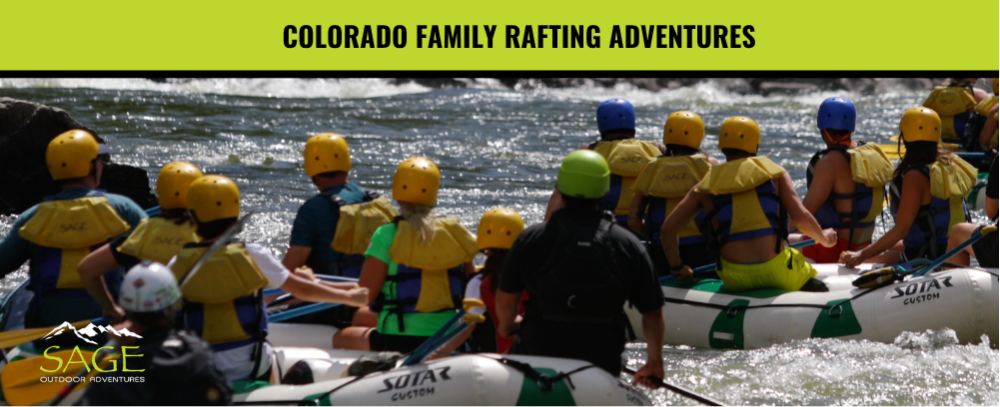
- Fencing in the youngest riders. In any class, small kids can ride in the center of the boat between adults.
If someone in your family cannot swim, that question has its own honest answer in our guide to white-water rafting for non-swimmers. And if you are still deciding among classes for the adults in the group, our guide to white-water rafting for beginners breaks down how that call is made.
When to Book a Family Rafting Trip
Sage rafts May through September, and there is a family trip available across that whole window. Two things shift with the calendar:
- Class III age minimums track the water. Early-season high water pushes the minimum to 8; as flows drop, it drops to 7.
- The rivers rotate. Gore Creek in downtown Vail and the Eagle River run roughly May through late June or early July. After that, the Shoshone on the Colorado and Browns Canyon on the Arkansas carry the Class III season. The Class II Upper Colorado runs all season long.
Whenever your family visits, there is a Class III ready; it is just a different river depending on the month. For the month-by-month picture, see our guide to the best time for rafting in Colorado.
What Kids Say After the Trip (and What Parents Ask Next)
The most common reaction from kids stepping off the river is that they want to go again immediately.
“Kids generally, as soon as they get off the river, they want to go right back and do it again.” Anders Dahlberg, Director of Operations, Sage Outdoor Adventures
The second most common: they want more. Class II kids start lobbying for Class III before the PFDs are back on the rack. If they meet the minimum age, that step-up can happen the very next day, and parents ask exactly that: how do we book it, and what does the bigger trip look like compared to today? The reservation team walks through both every summer.
How to Make the Family Rafting Day Go Well, From Breakfast On
Anders’ checklist for parents, starting when everyone wakes up:
- Feed and hydrate the crew. Rafting is a physical activity, and even sitting in Colorado sun is taxing. Hearty breakfast, plenty of water.
- Sunscreen before you arrive. Long-sleeve river shirts help too. Lather up early; reapplying on the water is a losing game.
- Pack towels and a change of clothes. Class II riders stay mostly dry unless they choose to swim. Class III riders are getting soaked, guaranteed. Leave the dry clothes in the vehicle at the take-out.
- Bring snacks for after. Kids come off the river hungry. The boathouse sells snacks and drinks, but having something for the drive back saves the day’s last hour.
Family Rafting With Sage Outdoor Adventures
Sage has been running white water rafting in Vail, Colorado for families since 2009, with the Class II Upper Colorado taking riders as young as 2 and a rotating lineup of Class III rivers for kids 7 and up. The guides who lead these trips run them daily, so the class-versus-age call is made on current water, not a chart from last month.
Browse all our rafting trips to compare stretches, or call 970-540-5741 with your kids’ ages and weights. The reservation team will put your family on the right river the first time.
Ask a Sage Guide: White Water Rafting With Kids
Parents always ask about age, but is age actually the right thing to focus on, or is there something else that matters more?
“With age being a factor, we have our limitations for our Class 3 minimum age being 7 or 8 based on water level, and then our Class 2 is 2 years old. Our personal flotation devices have weight limits, so that is something to consider. Anyone under 50 pounds uses a smaller personal flotation device, which is only allowed on our Class 2 stretch. Above that weight, we have appropriate sizes for them. The thing that changes in Class 3 is we don’t want younger kids falling out of the boat and splashing around in the water. So age is the main factor we focus on for the appropriate trip. Generally, if younger kids are on a Class 3 stretch, they won’t necessarily be sitting on the outside of the boat actively paddling. They’re generally sitting farther inside the boat, fenced off on either side by the parents, so it’s less likely those kids will fall out. But mainly we focus on age.”
What does a Class 2 trip look like when there’s an 8-year-old in the boat? What should parents expect?
“Class 2 is an awesome white water trip for all ages. We take kids as young as 2 years old. There is tons of time for us to go swimming, whether it’s in deeper sections of the river, and there’s also a little beach area that we stop at, about halfway down the river. So halfway through the trip we have an opportunity to go to Cannonball Island, check out the little tipi beach, hang out, and do some swimming over there. On the actual boat, the kids can sit wherever they want. They’re not actively paddling. That’s all the guide on the oars. They’re rowing and controlling the boat, and everyone else is hanging out, relaxing. The kids can move around the boat as they please. They can look at things. They don’t have to be focused on steering the boat. Again, that’s all on the guide. They’re able to just sit back and relax, and the parents can allow the guide to babysit while they take a breath and enjoy the scenery as well.”
What do you do when a kid is nervous at the put-in, and the parent is unsure whether to go ahead?
“Generally, our res team does a great job of booking parents and kids on the appropriate tour. When we get to the put-in, we can reiterate that: ‘Hey, this isn’t above the level that we signed up for. It’s super, super fun. We take first-timers all the time.’ If a kid’s really nervous, they can sit right by the guide. They have that professional person right there. If they’re ever worried about falling out, they’re right next to the guide to prevent it. We can also do a thing in the boat where we sandwich the kids between the adults. They can sit right in the middle of the boat. That way, they’re well enough away from the edge of the boat that the likelihood of falling out is slim to none at that point.”
What are the safety things parents worry about most, and what actually addresses those concerns on the water?
“As a parent, you’re probably most concerned about your kids falling out of the boat, or even yourself falling out of the boat. Whether on a Class 2, Class 3, or Class 4, we have a safety orientation before we even get on the water. This will address all those things. There is a risk of falling off the boat, but there are plenty of ways we can prevent it. One is as simple as sitting properly in the boat. We’re sitting on the edge of the boat, and we can lock our feet in; that’s our quote-unquote seatbelt. Just sitting properly and keeping your feet locked in eliminates a whole lot of the falling-out factor. Also, actively paddling: when your body’s engaged and you’re actually participating in the event, you can hit a big old wave, but you’re ready for it, as opposed to just drifting off and not paying attention, where our body’s a little more lackadaisical, so if we do hit a wave, there’s a potential to fall out. But also, if we were to fall out, we go over all the different scenarios: how we want to be sitting in the water, what we’re going to be listening for from our guides, what we want to be doing as far as where we’re going to swim, if we’re going to throw a bag of rope. All these different things we address in that safety talk before we even get out on the water. Even for younger kids, whether on a Class 2 or a Class 3, we can fence them in. We can have them sit in the center of the boat, with a fence line of parents on either side. That’s preventing them from falling out even further. So we address all these things before we even get on the water, which usually builds up confidence for everyone.”
Are there conditions, such as water level or the time of year, that affect whether a family trip is the right call?
“Not really. We can pretty much raft from May through September. The water levels do fluctuate, so the only real major thing there is that if we have a Class 3 section, our age requirement does fluctuate with that water. Higher water levels equate to a higher age. We don’t really want little ones falling out of the boat at higher water. As the water level comes down, our ages are adjusted accordingly. As far as the time of season goes, what’s awesome about our company is that we have multiple stretches. Anytime you come out, we have a Class 3 trip ready for you guys; it just happens to be at a different location depending on the time of year. For example, the Gore Creek right in downtown Vail, as well as the Eagle just outside of Vail, are more of a May through late June, early July trip with our Class 3s. If you wanted something a little after that, we have our Colorado Shoshone, as well as the Arkansas River at Browns Canyon (Class 3), available during that time of year, whereas our Class 2 stretches run from May through September. So really, anytime you guys come out, we have those trips ready for you.”
What do the kids usually say after the trip, and what do the parents say?
“Kids generally, as soon as they get off the river, want to go right back and do it again. Especially on Class 2, they’re going to say they want to do that one again, or they want a little bit more excitement, so they want to go to Class 3. As long as they are age-appropriate for the next step up, we can go the next day, or if they want to come back next year, we can always book them for that as well. Kids are always looking for that excitement. On our Class 2, you get plenty of excitement, but it’s a milder stretch, geared more towards the younger kids. As long as they are 7 or 8 years old, depending on the water levels, we can bump it up to a Class 3. I would say it’s very similar with parents as well. Sometimes they book online not really knowing; maybe they have a little bit of concern for the kids, so they want to go to a smaller Class 2 instead of a Class 3 right away. If you were to call in and talk to our amazing res team, we can describe all these trips for you, discuss the kids’ ages and other details, and get you on the appropriate trip. But if they did a Class 2 and they want to step it up, parents are asking how do we go ahead and book that, and what does that trip look like compared to a Class 2, and we can give you all the details and describe what that tour’s going to be like to go to the next level.”
What should a family do to make sure the day goes well, starting from when they wake up that morning?
“Doing activities in Colorado, this rafting especially, this is a physical activity. Class 2 is not as much as Class 3 or 4, but make sure you guys wake up, have a good, hearty breakfast, and get some good liquids, some good water in you before you come out. Even just sitting outside in the sun can be taxing on our metabolism and our water. So make sure you have plenty of liquids with you. We do provide some snacks and drinks down here at our boathouse for purchase if you need anything like that. I think it’s always a great idea to bring some snacks for after the tour, for the kiddos, for the drive back to the hotel, whether we’re driving you in our vehicles or you’re driving in your personal vehicle. Also, sunscreen’s very important. You can always wear long-sleeved river-type shirts to protect you from the sun, but sunscreen’s great as well. You can lather that up before you even come out. Another thing to consider bringing is towels and, if needed, a change of clothes. On our Class 2 stretch, unless we’re swimming in the river at the appropriate spots, you don’t really get super wet, so towels are always something you can just have sitting around; you don’t necessarily need them. Whereas in Class 3, we’re definitely going to get soaked. So having that standby in our vehicle when you get to the take-out is good. Make sure you bring a change of clothes and a towel as backup in case you need it, and then of course those snacks, water, and sunscreen are great to have for a really awesome, memorable experience out here.”
Frequently Asked Questions
What age can kids go white water rafting?
Near Vail, kids as young as 2 can ride Sage’s Class II family float on the Upper Colorado, where the guide does all the rowing. Class III trips start at age 7 or 8 depending on the water level that week. Higher, faster water raises the minimum age.
Is there a weight limit for white water rafting with kids?
There is a fit requirement, not a limit. Life jackets are sized by weight, and kids under 50 pounds wear a smaller PFD that Sage only allows on the Class II stretch. Above 50 pounds, appropriately sized jackets open up the Class III trips, subject to the age minimums.
Do rafting age requirements change with water levels?
Yes. On Class III stretches, higher water means bigger waves, so the minimum age rises to 8 during high early-season flows and drops to 7 as levels come down. Class II minimums stay at age 2 all season. Outfitters confirm current minimums when you book.
Is white water rafting safe for kids?
With the right class for their age and weight and a professional guide, yes. Every trip starts with a safety orientation covering seating, the feet-locked seatbelt position, and fall-out procedures. Guides can seat kids in the center of the boat between adults for extra security.
What should a family bring for a rafting day?
A hearty breakfast beforehand, plenty of water, and sunscreen applied before arrival. Pack towels and a change of clothes for the vehicle: Class II riders stay mostly dry, but Class III riders get soaked. Snacks for the drive back keep hungry kids happy after the river.

Anders Dahlberg
Director of Operations
