
WHITE WATER RAFTING FOR BEGINNERS: HOW TO CHOOSE YOUR FIRST TRIP
Choosing your first rafting trip comes down to three things: the rapid class, the ages in your group, and how much your group wants to paddle.
That is it. Not fitness. Not experience. Not whether you have done this before.
In this article, Anders Dahlberg, Director of Operations at Sage Outdoor Adventures, walks through how our guides match first-timers to the right trip every day: what Class II versus Class III actually feels like, what the safety briefing covers, and why the thing beginners fear most on the drive over is usually forgotten by the second rapid.
If you are researching beginner white water rafting and worried about picking the wrong trip, this is how the right one gets picked.
Class II or Class III: The Only Decision That Matters on a First Trip
Rapids are rated on the International Scale of River Difficulty, a system maintained by American Whitewater that runs from Class I to Class VI. For a first trip near Vail, only two classes are really on the table, and Anders describes the difference better than any chart:
“Class 2 is basically just a moving current. We might see a little bit of white water, splashes here and there, bouncing off rocks. Class 3, we actually have to maneuver our boats around obstacles, larger rocks and hydraulics.”
For anyone who knows Vail in winter, he offers a shortcut: Class II is your green circle, Class III is your blue square.
| Class II | Class III | |
| The water | Moving current, splashes | Real rapids, waves, obstacles to steer around |
| Who does the work | The guide rows, you ride | Everyone paddles on the guide’s commands |
| Helmets | Not required | Mandatory |
| Youngest age | 2 years old | 7 or 8, depending on water level |
| Fitness needed | None | None |
The gap between the two is bigger than most first-timers expect. Class II is built as a family float, with swimming stops and time to look around. Class III is where rafting starts feeling like the videos. Class IV exists too, but it is the first level with a real requirement attached: if you fall out, you need to be able to swim back to the boat on your own. That one is rarely the right first trip.
Not sure which side of that table your group lands on? This is the exact conversation our reservation team has all summer. Call us at 970-540-5741, describe your group, and we will honestly tell you which trip fits.
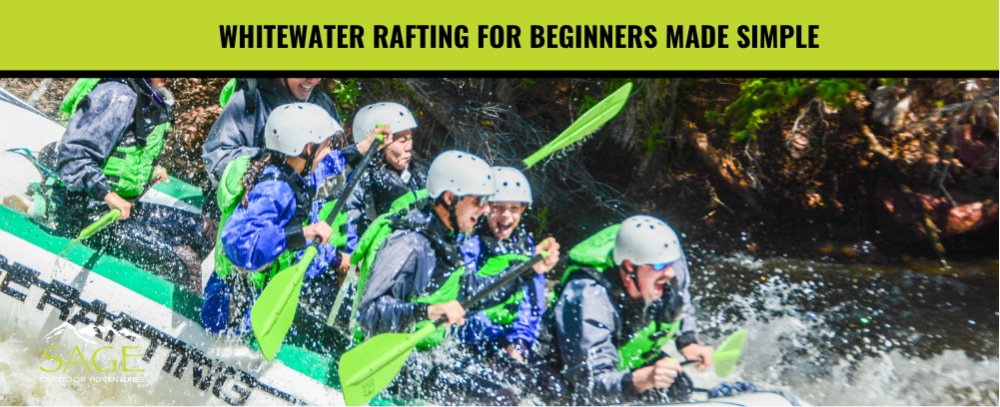
The Fear Every First-Timer Brings, and Where It Goes
Ask Anders what beginners worry about most and the answer is immediate: falling out of the boat.
Ask him how often that worry survives the launch, and the answer is the safety briefing.
Before any Sage boat touches the water, every guest gets a safety talk and a paddle talk. You learn what Anders calls the seatbelt: sitting properly on the edge of the boat with your feet locked under the tube. The guides demonstrate it multiple times. Then you learn the paddle commands, forwards, backwards, and the calls the guide uses to turn the boat.
The part nobody expects is that paddling itself is what holds you in. “Actually giving an effort to paddle the boat really helps to lock you in,” Anders explains. “You can lean your head all the way out and touch the water, and using your core and your legs, pull yourself back in.”
The briefing also covers what to do in the rare case someone does come out of the boat. If safety is the question keeping you from booking at all, our guide on the dangers of white water rafting answers it directly.
Matching the Trip to Your Group
There is no fitness bar for a first trip. “Any first-timer, any fitness level can really do any Class 2, Class 3,” Anders says. “We take first-timers from all walks of life every day.” What actually decides the trip is different:
The ages in your group. Class II on the Upper Colorado takes guests as young as 2. Class III trips like the Shoshone and the Lower Eagle start at 7 or 8 depending on water level, and Gore Creek through Vail Village starts at 10.
How much your group wants to work. If paddling on command sounds like the fun part, choose Class III. If your group wants to ride, swim, and take photos, choose Class II.
The most nervous person in the boat. Build the trip around them, not the boldest voice. And you do not have to drop the whole group a class to do it. A nervous guest can sit at the back of the boat next to the guide, or on the thwart in the center of the raft, well away from the edge. As Anders puts it, when a nervous guest is in his boat, “they’re sitting right next to me, I can grab them right away.”
If your group is split between the two classes, five minutes on the phone beats guessing. Our team runs this matching conversation before anyone gets in a boat, every single trip.
What First-Timers Say at the Take-Out
The most common thing Anders hears after a trip is not about fear. It is about calibration, in both directions.
Groups of twenty-somethings sometimes book Class II and find it mellower than they pictured, because that stretch is genuinely built for families. And some Class III groups finish the run wanting more, realizing a Class IV was within reach.
“Rafting is a team sport. The guide in the back is really just steering that vessel. Our guests are the engine.” Anders Dahlberg, Director of Operations, Sage Outdoor Adventures
That is worth knowing before you book, not after. If your group’s honest goal is excitement, do not let nerves talk you into the mellowest option. Book the Class III, tell the guide it is everyone’s first time, and let the seating and the briefing handle the rest. The trip you slightly stretched for is the one people talk about at dinner.
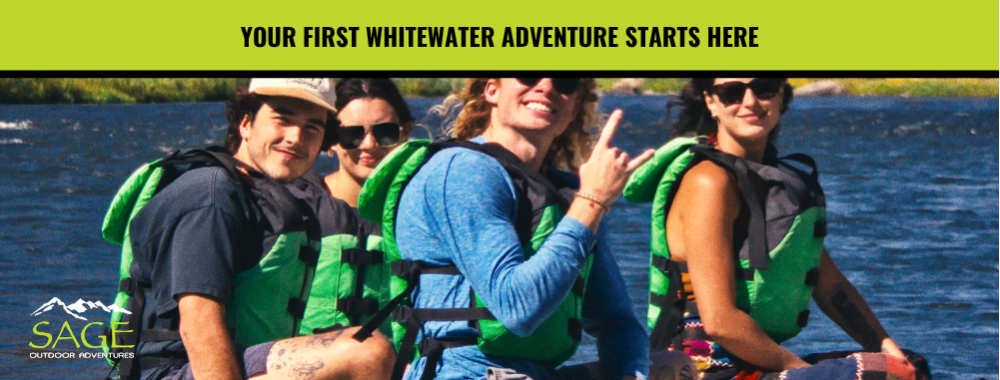
Your First Trip With Sage Outdoor Adventures
Sage runs white water rafting in Vail across multiple rivers and every class from family float to Class IV, which is exactly what makes a first trip easy to get right. Our guides run these stretches daily, so they know how each one is behaving at today’s water level, not just what the chart says. Every trip includes the full safety briefing, all flotation gear, and a guide whose job is matching the day to your group.
Browse our Vail whitewater trips to compare classes and ages side by side, or see all our rafting trips including the Buena Vista runs.
Questions first? Our rafting FAQ covers gear, timing, and what is included, or call 970-540-5741 and let the reservation team match your group to the right water.
Ask a Sage Guide: Choosing Your First Rafting Trip
Someone is looking at the trip options and has no idea what Class 2 versus Class 3 actually means for them. How do you explain it?
“There are two ways we can explain it. One, we can base it similar to a ski resort. A Class 2 is your beginner, your green circle, whereas a Class 3 is a bit more of a step up, similar to our intermediate blue squares in skiing terms. Another way to think about it is that Class 2 is basically just a moving current. We might see a little bit of white water, a little bit of splashes here and there, just bouncing off rocks, whereas in Class 3 we actually have to maneuver our boats around obstacles, larger rocks and hydraulics. So there is more active paddling in Class 3, whereas Class 2 is generally a rowing section where the guides are doing all the work. As far as the gear goes, on Class 2 we don’t require helmets, and we do provide the personal flotation devices, whereas on Class 3 we do wear helmets, that is mandatory, and we are paddling on that one.”
What is the thing first-timers are most worried about that turns out to be way less of a big deal once they are on the water?
“From personal experience, first-timers are really afraid of falling out of the boat. Once they’re on the water, though, and they’ve had their safety talk and their paddle talk in two different areas, the guides have demonstrated how to lock our feet in, which is our quote-unquote seatbelt. And then actually physically paddling, actually giving an effort to paddle the boat, really helps to lock you in the boat. So you’re really, really solidly locked in. You can actually even lean your head all the way out and touch the water, and using your core and your legs, pull yourself back in. Having proper seating in the boat, which is demonstrated multiple times by the guides, really alleviates that worry of falling out of the boat.”
What does the safety briefing actually cover, and what do most people not realize they need to know before they go?
“There are two things here. The safety briefing is going to go over the possibility of falling out of the boat and what to do if that were to occur. And the other thing is actively paddling. We are actively engaged. It’s not just floating down the river unless you’re on a Class 2, but on a Class 3 or 4 you will be actively paddling to help maneuver that boat down the river. So we go over how to lock ourselves in the boat, and if we do fall out of the boat, the actions to take to get ourselves properly and safely back into the boat or back to the shore. And then our paddle commands, showing you how to actively paddle and what those commands will sound like from the guides, whether we’re going forwards or backwards, or helping the guide to turn that boat.”
How do you figure out the right trip for a group when people have different comfort levels? Say one person is nervous and the rest are not.
“There are two ways you can go about that. You can always go down to a lower class if you’re a bit more nervous. As you go down from Class 3 to Class 2, there is quite a big difference in the size of the waves, how fast we’re going, and how we have to maneuver around those rapids. Another option is that our Class 3s can take kids as young as 7 and 8 years old. Someone who is really nervous, when they’re in my boat, I have them sit towards the back of the boat, towards the guide, towards me, so in case they’re starting to fall out, they’re sitting right next to me and I can grab them right away. Or sometimes we’ll even put someone sitting on the thwart, which is in the center of the boat, so they’re well away from the edge of the raft and extremely unlikely to fall out of that boat, easing their comfort level.”
Is there a fitness level someone needs to have before they book, or can pretty much anyone do it?
“Pretty much anyone, any first-timer, any fitness level can really do any Class 2 or Class 3. When you get into Class 4, that’s when we want to have a bit of a fitness level, because if you were to fall out, we need to be able to actively swim back to our boat or to shore for rescue. But on a Class 3 or Class 2, there’s really no fitness level that is going to keep you away from getting on the river. We take first-timers from all walks of life on Class 2s and Class 3s every day, so come on out.”
What do first-timers say after the trip that they wish they had known before they booked?
“For Class 2, sometimes first-timers don’t realize how mellow the stretch can be. We still hit rapids here and there, but it is geared more for a family float. We take kids as young as 2 years old on that, so sometimes if we get a group of 20-year-olds who book it, they don’t quite realize they’re going on a milder float. Same thing with Class 3, sometimes they’re thinking it’s going to be a little bit bigger than what they expect. Granted, we do have multiple different stretches on Class 3 that all have their own characteristics as far as volume of water and the size of those rapids. But sometimes I’ll get a group on a Class 3 that was looking for a little bit more excitement, so maybe they could have gone and done a Class 4 instead of that Class 3. That’s generally something I’ll hear from first-timers at the end of their tour.”
What is the one thing you tell every first-timer that seems to make the biggest difference in how much they enjoy it?
“Listening to your guide and following their commands. Rafting is a team sport. The guide in the back is really just steering that vessel, whereas our guests are the engine. They create all the power for us to get through the rapids safely and hit those awesome, fun waves in the process. The harder you work and the more you listen to the commands from your guide, the more we can maneuver, hit those really fun waves, and get down safely, still having a smile on our faces the entire time. The more you pay attention to the commands your guide is giving you, the more excitement we can have out on the river.”
Frequently Asked Questions
What class of rapids is best for beginners?
Class II or Class III. Class II is a guide-rowed float with small waves, ideal for families and anyone nervous about their first trip. Class III adds real rapids, mandatory helmets, and active paddling, and stays fully beginner-friendly with a professional guide. Most first trips in Colorado start on one of these two.
What is the difference between Class 2 and Class 3 rapids?
Class II is moving current with small splashes, where the guide does the rowing. Class III requires maneuvering around rocks and hydraulics, so guests paddle on command and helmets are mandatory. The step up in wave size and speed between the two classes is bigger than most first-timers expect.
Do you need to be physically fit to go white water rafting?
Not on Class II or Class III trips. Any fitness level can join, and guides adjust seating for anyone who needs it. Fitness only becomes a requirement at Class IV, where guests must be able to swim actively back to the boat or to shore if they fall out.
Can a beginner do Class 3 rapids?
Yes. Class III is the most popular first-timer level in Colorado because it delivers real white water while a professional guide handles the navigation. The safety briefing covers paddle commands and proper seating before launch, and minimum ages start at 7 or 8 depending on water level.
Do guests have to paddle on every rafting trip?
No. On Class II stretches the guide rows the entire trip while guests relax, swim, and enjoy the scenery. On Class III and above, everyone paddles as a team following the guide’s commands. How much your group wants to paddle is one of the main ways to choose your first trip.

Anders Dahlberg
Director of Operations
