
IS WHITE WATER RAFTING DANGEROUS? WHAT FIRST-TIMERS NEED TO KNOW
White water rafting is safe, but it comes with real risks. Both of those things are true, and understanding the difference is exactly what separates a great first trip from a bad one.
“Is white water rafting dangerous?” is the right question to ask, and the honest answer is that the danger is manageable when you go with a certified guide who matches your group to the right experience. For anyone considering white water rafting in Vail, Colorado, that trip-selection conversation is the most important safety decision you will make.
The Real Risk Factors in White Water Rafting
Rafting is neither uniformly dangerous nor uniformly tame. The risk profile changes based on specific conditions and choices; understanding where the risk actually lives is more useful than a blanket reassurance.
- Trip selection: Is the most common contributing factor in serious rafting incidents. A study found an overall injury rate of just 0.26 per 1,000 rafters across multiple river systems, and a separate American Whitewater analysis found that fatality rates for commercial rafting were five times lower than for private, unguided boating. The data points in the same direction: guided trips on appropriate water are a low-risk activity by any reasonable measure.
- Cold water: is a genuine hazard that most people underestimate. Colorado rivers fed by snowmelt run 45 to 55 degrees Fahrenheit through most of the season. The National Center for Cold Water Safety identifies cold shock, an involuntary gasp reflex triggered by sudden submersion, as the primary hazard in unexpected water entry.
- Foot entrapment: is one of the most serious in-water hazards in river sports and one of the most preventable. It occurs when a swimmer’s foot catches between submerged rocks while attempting to stand in a moving current. The rule every guide covers in the pre-trip briefing: never stand up in moving water, regardless of depth.
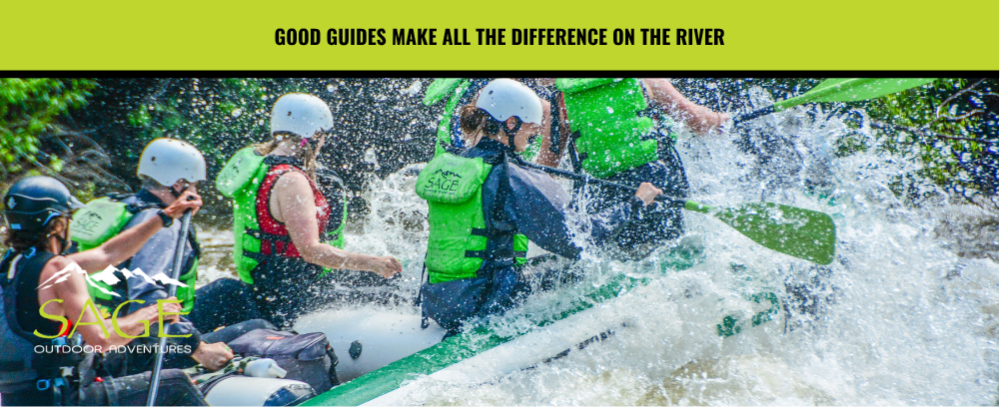
- Impact injuries: are the most common injury type in commercial rafting. A study found that nearly half of all rafting injuries involved the head, neck, and shoulders, with lacerations the most common injury. Most of these happen either from contact with another rafter’s paddle inside the boat, or from striking a rock after falling out. This is exactly why Sage provides helmets on all trips.
First-timers who ask whether white-water rafting is dangerous are usually surprised to learn that the gear they are given before boarding directly addresses most of the risks above.
How Sage Guides Make the Trip-Matching Decision
The biggest safety decision in white water rafting happens before anyone gets in the water. It is the trip selection conversation, and it is more nuanced than most people expect.
Age matters, but it is not the only variable. Guides at Sage assess fitness level, water comfort, group composition, and prior rafting experience together. A group of fit adults who have never rafted is a very different conversation from a mixed-age family with children under ten. The guide’s job is not to push a more intense trip; it is to find the right one.
Sage operates on the Upper Colorado and Eagle River corridor near Vail, where multiple options run within the same drainage. That flexibility means the trip can be calibrated to your group rather than the other way around. It is one of the reasons first-timers choosing white water rafting in Vail, Colorado consistently say the pre-trip conversation made them feel prepared before they ever touched the water. If you are still working out which experience fits, the white-water rafting for beginners guide walks through exactly how that conversation works for first-timer groups.
Sage provides wetsuits, splash jackets, helmets, and personal flotation devices on all trips.
What to Do If You Fall Out of the Raft
Falling out is the fear most first-timers carry onto the water. It happens, it is recoverable, and knowing what to do ahead of time is the difference between a scary moment and a dangerous one.
- Stay calm and do not fight the current. The river will move you; working against it wastes energy and increases risk. Let the water carry you while you get your bearings.
- Get on your back, feet downstream, toes up. This is the defensive swim position. Your feet absorb impact with any rocks ahead, your PFD keeps your head above water, and you can see where you are going. Do not attempt to stand — foot entrapment is the most serious hazard in this situation, and it can happen quickly in moving water.
- Keep your eyes on your guide. Sage guides are trained in swift-water rescue and positioned on the water specifically for this scenario. Your job is to stay in position and make yourself visible. They will reach you with a paddle, a throw rope, or the raft itself.
- Wait to stand until the water is calm and shallow. Crawl out rather than standing up the moment you feel bottom. The current can still knock you over in knee-deep water, moving quickly.
Sage covers all of this in the pre-trip safety briefing before every departure, not as a formality, but because a guest who has heard it once reacts better than one who hasn’t.
Ready to Figure Out Which Vail Rafting Trip Fits Your Group?
The safety conversation and the trip selection conversation are the same conversation. If you are researching white water rafting in Vail, Colorado, and want a straight answer about which trip fits your group’s experience level, that is exactly what Sage guides do before every booking.
FAQ: Is White Water Rafting Dangerous?
Is white water rafting dangerous for non-swimmers?<
Non-swimmers can raft safely on appropriate guided trips. Personal flotation devices are Coast Guard-approved and sized to keep guests above water without swimming ability. Guides specifically address non-swimmers during the pre-trip briefing and position them in the boat accordingly.
What are the most common white water rafting injuries?
According to research published in Wilderness & Environmental Medicine, the most common injuries in commercial rafting are contusions and lacerations from contact with the raft or rocks, followed by shoulder injuries from paddle bracing.
What happens if I fall out of the raft?
Stay on your back with feet downstream and pointed up. Do not attempt to stand, and keep your eyes on your guide. Guides are trained in swift water rescue and are positioned throughout the trip with this scenario in mind.
Is white water rafting in Vail, Colorado, safe for families?
Yes, with the right trip selection. White-water rafting in Vail, Colorado, offers several family-friendly options for children as young as six, depending on current water levels.

Kelley Atwell
Group Sales & Concierge Relations
Working in the outdoor tourism industry is amazing! Every day presents the opportunity to introduce visitors to the beauty of Colorado’s rivers & mountains and help create lasting memories.
This winter, I’ll be diving into Sage Outdoor Adventures to spearhead Group Sales, Concierge Relations, and Strategic Partnership Development.
As manager of Liquid Descent Rafting, my role requires balancing fast-paced internal operations while keeping the energy high and exciting for all our customers! As a small business that only operates for a few months a year, high-volume sales and efficiency are key to success. Juggling retail, transportation, reservations, compliance, marketing, customer experience, and 30 employees presents a dynamic, ever-changing opportunity to apply problem-solving skills.
I love being a part of a small business and having the autonomy and self-initiative to dive into whatever project presents itself.
Regardless of the role I pursue, I bring empathy, hard work, a willingness to learn, and a sense of internal competitiveness that enable me to make a valuable contribution to teams across all objectives.
